
Role
Research, Environmental Sensing,
Climate Data Analysis, Data Storytelling,
Prototyping + Beekeeping
Advisor
Herin Haramoto
Date
May - June '25
Scope
Master's Thesis (CIID)
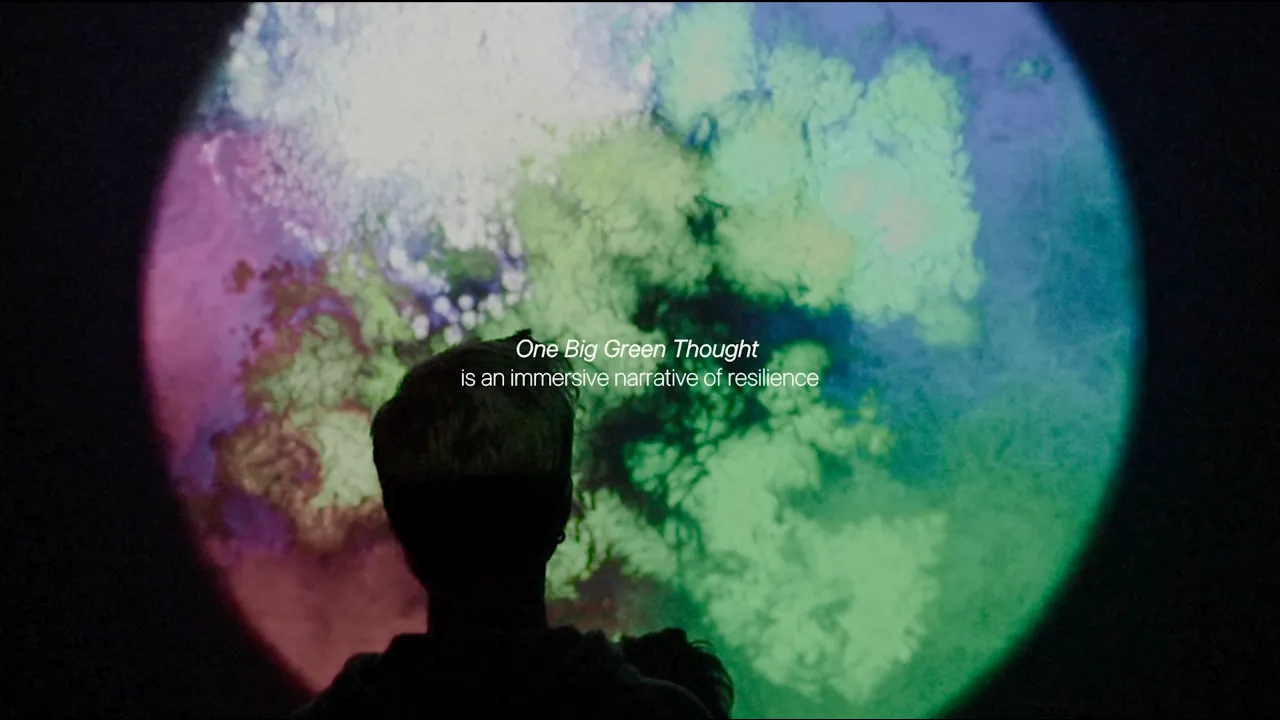
One Big Green Thought
Dominant climate conversations operate at scales that distance most beings
from designing their own resilience. From a rare archive of multi-modal
data gathered during the second hottest May in the planet's recorded history,
One Big Green Thought anchors climate futures to the viewpoints of those
living within them, by translating ecological signals into an embodied experience.
Climate change is erasing
shared memories.
What is a meadow with thousands of species of flowers, in a world where it exists only as a memory?
How do you describe a land full of hanging glaciers when they've melted?
How do you recreate a family recipe when its ingredients rely on pollinators facing risk of collapse?
We are in the midst of a transition where the effects of climate change are undisputed reality. Climate scientists warn of fast-approaching tipping points, with some already crossed. Cataclysmic events arrive ahead of projections. Everyone now shares a stake in the planet's future.
The Orto Botanico di Bergamo became the site for the project due to its unique location within the
"Valley of Biodiversity”. The region serves as an ecological corridor for various beings.

But whose futures get
imagined, and which
memories are preserved?
In nature, ecosystems encode memory of past stresses to build resilience against future ones, retaining just enough information from the first shock to prepare for the next. But this memory is fragile. It fades
if the stress turns chronic. As the climate crisis accelerates, the urgency lies in keeping ecological memory from fragmenting beyond repair, so we can begin to imagine and plan for preferable futures.
In May 2025, Northern Italy experienced temperatures 2.1°C above normal, dwarfing the broader Mediterranean's 1.4°C surge. In the foothills of the Italian Alps is Astino Valley, home to Orto Botanico di Bergamo, a site of dynamic interactions between many intelligences, big or small, simple or complex.
Data is memory,
encoded.
This ecosystem's memory of the May heat lived in layers of data: stressed hums from beehives as acoustic signals; visiting families comparing early-season heat to past years, with concern for younger generations; leaves wilting and blooms closing early in sync with rising temperatures and drying air tracked by the garden's weather station. The result was a dataset consisting of millions of bio-acoustic datapoints, visitor observations and continuous meteorological measurements.
What is One Big Green Thought?
Numbers rarely touch our imaginations, while stories do. One Big Green Thought preserves an ecosystem's signals in an archival artefact, translating climate data into shared memories of now and accounts of probable futures. Visitors navigate the garden's story through memory-scapes that shift across scales: from human perspectives in May 2025, to pollinator experiences of the heatwaves, to regional climate projections 20 years into the future.


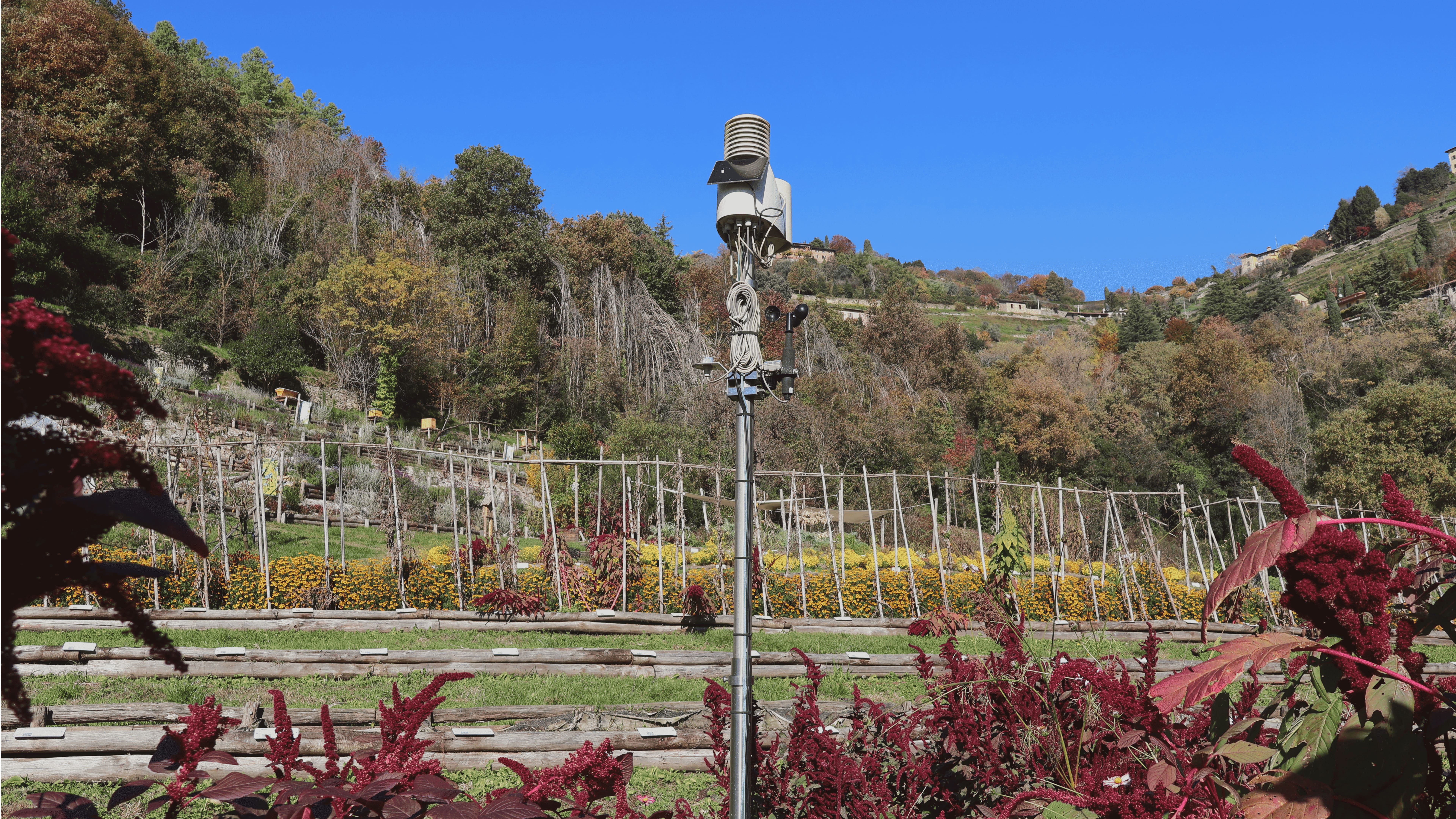
The weather station which tracks regional meteorological values across 10+ parameters, such as wind velocity,
solar radiation, dew point etc.
Place-based Research
May 2025 was the second hottest May in recorded history. Snow reserves melted a month earlier than average in the Italian Alps, with Northern Italy becoming a regional hotspot. Temperatures here rose +2.1°C above normal, dwarfing the broader Mediterranean's heat surge that touched +1.4°C. In the foothills of the Alps is Astino Valley, where this project began.
The Orto Botanico di Bergamo in Astino Valley became the site of inquiry: a living laboratory of the relationship between people and nature. A site of dynamic interactions between many intelligences, big or small, simple or complex, the ecosystem here consists of the bees
(and a plethora of other pollinators), the plants and visitors, young and old alike.
With support from the garden's caretakers, from the team monitoring weather sensors to the beekeeper tending to the beehives and educating children about pollinators, the research gathered signals across scales.
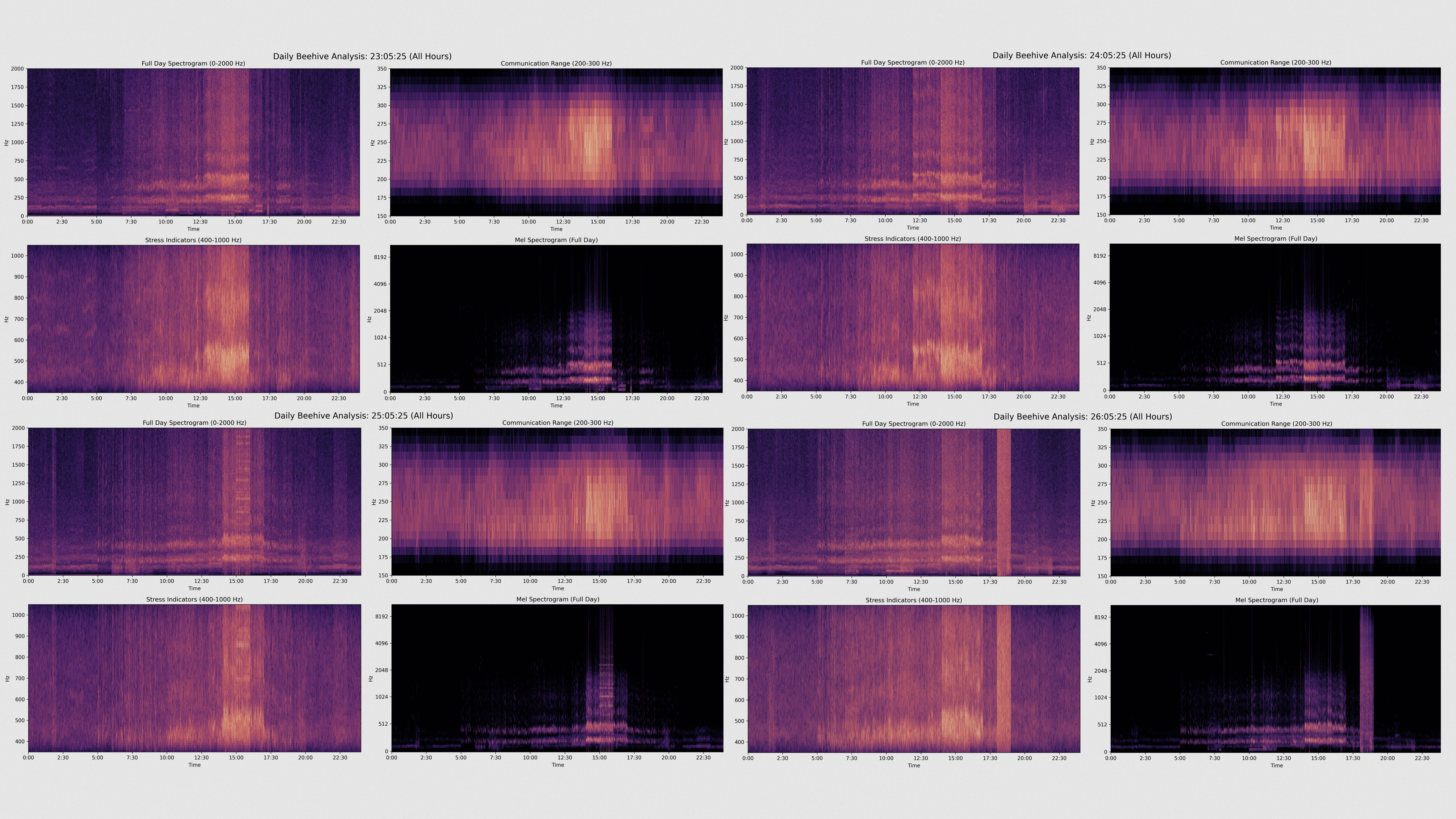
An ultrasonic recorder installed in the hives captured millions of bio-acoustic datapoints, to distinguish between communication frequencies and stress signatures. These were mapped against the garden's meteorological data, revealing a strong correlation between atmospheric dryness and rising temperature with the hive's stress responses. Regional climate models based on CMIP6 projections were then integrated to forecast how this ecosystem's conditions might change over the next 20 years, under current-to-high emission trajectories.
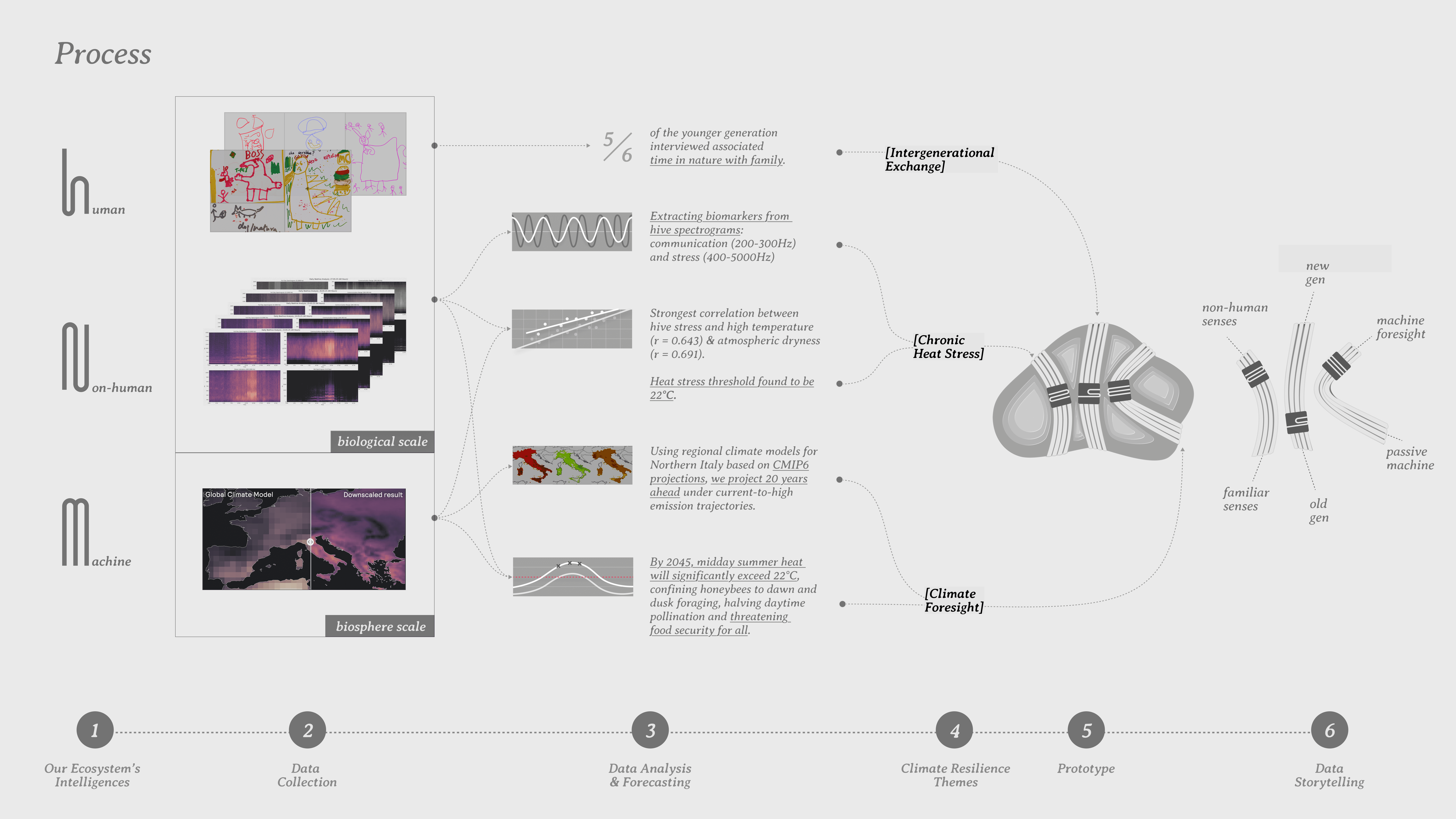
But the garden's memory of May 2025 wasn't only in this data. Conversations with visiting families revealed another layer: for younger visitors, time in nature was inseparable from time with family. Meanwhile, older generations who accompanied their grandchildren to the garden shared anxieties around rising summer heat and its effect on the young, with some inquiring upon declining pollinator biodiversity and its effect on their grandchildren’s future.
Losing data about how this garden responded to May 2025 meant losing insights that could help it adapt to future extreme events. This meant that preserving these signals was vital, but translating them into adaptive foresight for resilience remained the real challenge to solve.


The Orto Botanico di Bergamo became the site for the project due to its unique location within the
"Valley of Biodiversity”. The region serves as an ecological corridor for various beings.
The weather station which tracks regional meteorological values across 10+ parameters, such as wind velocity,
solar radiation, dew point etc.